
adverb [疑问副词] 什么时候;什么情况下;什么场合下;(用于时间的表达方式之后)在那时,其时;当时,当场
When are you going home? 你什么时候回家?
pronoun [关系代词] 什么时候;何时
When eating a whole cooked fish, you should never turn it over to get at the flesh on the other side. 吃一整条做熟的鱼时,你永远都不要把鱼翻过来吃另一边的肉。
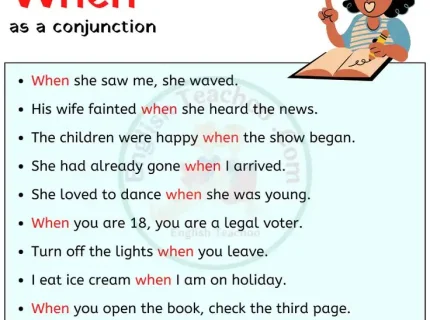
conjunction [从属连词] 在…时候;在…之后;在任何…时候;一…就;考虑到,既然;虽然,然而,可是
When I met the Gills, I had been gardening for nearly ten years. 我结识吉尔一家时,我已经几乎做了十年的园艺。
noun [抽象名词] 时间,时候;日期;场合
Nobody was in when we called. 我们打电话时家里没人。
conj. 既然;当 … 时;考虑到
- 网友用 “When” 造句精选
- Until when can you stay? 你可以待到什么时候?
- When would they be hired again? Perhaps, as the saying goes, when pigs fly. 他们什么时候会被重新雇用?也许正像俗话说的,等到猴年马月吧。
- Our mothers sat us down to read and paint, when all we really wanted to do was to make a mess. 我们的妈妈们让我们坐下读书、画画,而我们真正想要做的却是胡闹一阵。
- How can I love myself when I look like this? 既然我这么一副样子,我怎么能爱我自己?
- He could remember a time when he had worked like that himself. 他还记得当他自己也像那样工作的那段时间。
- I asked him when he'd be back to pick me up. 我问他什么时候回来接我。
- When he brought Imelda her drink she gave him a genuine, sweet smile of thanks. 当他给艾梅尔达拿来一杯饮料时,她给了他一个真诚、甜美、表示谢意的微笑。
when 的重要知识点
When 全能型选手(侧重“时间点”或“先后顺序”)
when 是最通用的词,既可以接瞬间动词(点时间),也可以接延续性动词(段时间)。它常常用来表示“某一具体时刻”或者“一个动作紧接着另一个动作发生”。
- When I arrived at the station, the train had left. (当我到达车站时,火车已经开了。——“到达”是一瞬间的动作,不能用 while)
- When the class is over, I will go to the gym. (下课后,我会去健身房。——先下课,后去健身房)
- The phone rang when I was taking a shower. (我正在洗澡时,电话响了。)
When 做疑问词
- When did you come here? 你何时到这来的?
- When does the meeting start? 会议何时开始?
- When will you finish your work? 你何时做完?
- When is this due? 什么时侯到期?
- When will the flight arrive? 飞机何时到港?
- When are you free? 你什么时候有空?
- When is your birthday? 你的生日是何时?
- When is he coming back? 他什么时候回来?
- When does the store open? 商店什么时候开门?
- When can I see you again? 我何时可以再见到你?
While 时间段专家(侧重“两个动作同时进行”)
当主句是短暂动作,从句是延续动作时,when 和 while 可以互换。
- While I was reading, my roommate was playing games. (我在看书的时候,我室友在玩游戏。——两个动作在同一段时间内平行发生)
- I like swimming, while my brother likes running. (我喜欢游泳,而我哥哥喜欢跑步。)
- The phone rang when / while I was cooking. (用 when / 都可以,后面通常用进行时)
As 同步伴奏大师(侧重“一边……一边”或“伴随变化”)
as 强调主句和从句的动作紧密结合,几乎同时发生,或者同步变化。它翻译成“一边……一边”或“随着”最贴切。
- He breathed a sigh of relief as he opened the letter. (他打开信时,松了一口气。——打开信和叹气几乎是同时、伴随发生的)
- As time goes on, things are getting better. (随着时间的推移,事情正在变好。)
- Just as I was leaving, it started to rain. (正当我准备离开的那一瞬间,天开始下雨了。)