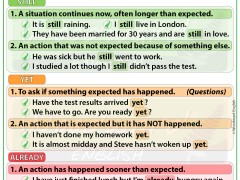
still [stil] adv. 还,仍旧
* * *
A: You know our company is a newly-built one. Things will go better with development.
B: Maybe. Thank you for your help, but I still want to leave the company to seek development.
A:你知道我们公司刚成立不久,所有事情都会随着发展而好起来的。
B:也许吧。谢谢您的关照,但我还是想离开公司另谋发展。
* * *
move [muːv] v. 搬家
【派】movement 动作
【扩】removal 搬迁
【搭】move in 搬进 move out 搬出
* * *
A: I really wouldn't want to move.
B: But we have to do so this time.
A:我实在不愿意搬家。
B:但这次我们必须这么做。
* * *
miss [mis] v. 想念,思念
* * *
A: I know how you miss your mother.
B: Yes, I have left my hometown for a year.
A:我了解你多么地想念你的母亲。
B:是的,我已经离开我的家乡一年了。
* * *
neighbor [ˈneibə] n. 邻居
【派】neighborhood 邻里关系
【扩】kith 邻居 vicinage 近邻
* * *
A: How are you getting along with your neighbor?
B: We get along with each other very well.
A:你和你的邻居相处得怎么样?
B:我们相处得非常好。
* * *
person [ˈpəːsn] n. 人
【派】personal 个人的 personality 个性
【搭】in person 亲自
* * *
A: You're a very important person at this party.
B: Oh, please don't make fun of me.
A:今晚的宴会你是贵宾。
B:哦,别嘲笑我了。
* * *
people [ˈpiːpl] n. 人们
* * *
A: I think people in the country are happier than people in the city.
B: Can you tell me why?
A:我认为乡下的人们比城市的人们更快乐。
B:能告诉我为什么吗?
* * *
poor [puə] adj. 可怜的
【扩】pitiful 可怜的
【搭】be poor at 在……方面差
* * *
A: Poor thing! He must be feeling awful now.
B: Is there anything we can do for him?
A:可怜的人儿!他现在一定很不好受。
B:我们能为他做点儿什么吗?
adverb [关系副词] 还,依旧;仍然,还是(会或可能);尽管那样,尽管如此;更加,还要(用于表示强调);还有(更多);静止地,不动地
Brian's toe is still badly swollen and he cannot put on his shoe. 布赖恩的脚趾头仍肿得厉害,不能穿鞋。
adjective [原级] 静止的,不动的;宁静的,寂静的;无风的;不含碳酸气的,不起泡的;(照片)静态的,(画面)定格的
David had been dancing about like a child, but suddenly he stood still and looked at Brad. 戴维一直像孩子那样蹦蹦跳跳,但突然打住,瞧着布拉德。
noun [抽象名词] (电影或录像的)定格画面,剧照;(制酒的)蒸馏器;静止,安静,平静
Four deafening explosions shattered the stillness of the night air. 4 声震耳欲聋的爆炸打破了夜空的宁静。
verb [vi. 不及物动词] (使)静止,平静,安静;使(感情)减轻,使(感情)平息;蒸馏
She spoke quietly to still the frightened child. 她轻声安慰受到惊吓的孩子。
与 “still” 相关联的词汇
move
/muːv/verb [vi. 不及物动词] (使)改变位置,(使)移动;搬家,调动;(使)改变观点(或做法);前进,进展;采取行动;使感动,打动;促使,驱使;更改(时间或日期);改变话题;走棋,移动棋子;(在会议或法庭上)提议;<非正式>快速行进;(商品)被销售,销售(商品);进行社交活动,交往;(使)改变状态(或观点、领域、活动);<非正式>离去;使(肠)排空
He lay there, unable to move. 他躺在那里,动弹不得。
noun [抽象名词] 措施,行动;移动,活动;转变,改变;一步棋,走棋;搬家,迁移;步骤;(运动或比赛中的)传递,转移
The car was already on the move. 汽车已经开动了。

与 “move” 相关联的词汇
miss
/mɪs/noun [专属名词] 小姐(未婚女子)、女士,年轻未婚女子
an unmarried woman or girl, esp a schoolgirl 女孩子; 女学生 Will that be all, Miss?
verb [vt. 及物动词] 想念,未击中,不懂;未做,错过
If you miss a chance or opportunity, you fail to take advantage of it. 错过 (机会) • It was too good an opportunity to miss. 这个机会太好了,不容错过。

与 “miss” 相关联的词汇
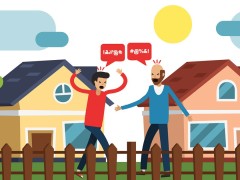
noun [专属名词] 邻居,邻人;邻近的人(或物);邻国;他人,世人
My neighbour spies on me through a crack in the fence. 我的邻居通过篱笆墙的缝隙窥探我。
verb [vt. 及物动词] (地方,物体)位于…的附近,邻接;住在邻近
He wished to live in amity with his neighbour. 他渴望与他的邻居和睦相处。
adjective [原级] 邻居的,邻近的
A neighbour sheltered the boy for seven days. 一个邻居将这个男孩藏了7天。

与 “neighbour” 相关联的词汇
neighbor
🇬🇧/ˈneɪbə(r)/ 🇺🇸/ˈneɪbər/noun [专属名词] 邻居,邻人;邻近的人(或物);邻国;他人,世人
And he said unto him, "Who is my neighbor?" 同时他对他说:“我的邻居是谁?”
verb [vt. 及物动词] (地方,物体)位于…的附近,邻接;住在邻近
I went to our next-door neighbor, Mr. Smith. 我去找了我们的邻居史密斯先生。
adjective [原级] 邻居的,邻近的
Do not defraud your neighbor or rob him. 不可欺骗你的邻舍,也不可抢劫他。
与 “neighbor” 相关联的词汇
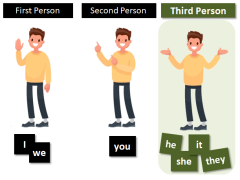
noun [具体名词] 人;自然人,法人;(用于不知其人是谁时)某人,家伙;(语法)人称;(用于复合词)从事…工作(或担任…职务)的人;人品,为人;身体,人身;喜爱(某事物)的人;(戏剧或故事中的)人物,角色;(基督教神学)(圣父、圣子、圣灵三位一体的)位;容貌,外表
If you talk about someone as a person, you are considering them from the point of view of their real nature. (从其真正本质出发而言的) 人
与 “person” 相关联的词汇
people
/ˈpiːp(ə)l/noun [具体名词] 人,人类;人们,大家(the people);平民,老百姓(the people);民族,种族(peoples);(具有共同品质、兴趣等的)人员,团体;与某人有联系的人们(one's people);<美,非正式>各位,诸位;<美>(审判中的)公诉人(the People)
People were talking animatedly. 人们热烈地交谈着。
verb [vi. 不及物动词] 居住在,定居于;充满,充斥着(某种类型的人)
Cell phones provide instant access to people. 手机为人们提供了即时的联系方式。

与 “people” 相关联的词汇
adjective [原级] 贫穷的;可怜的,不幸的;(身体)虚弱的,衰弱的;不擅长的,不熟练的;劣质的,差的,次的;贫乏的;(数量、比率等)不理想的,不合理的
The reason our schools cannot afford better teachers is because people here are poor. 我们学校请不起更好的老师是因为这里的人穷。