
noun [专属名词] 日元(日本货币单位);渴望
She's got a part-time job for which she earns 2,000 yen a month. 她得到了一份每月挣2000日元的兼职工作。
verb [vi. 不及物动词] vi. 渴望
...sterling's devaluation against the dollar and the yen. …英镑对美元和日元的贬值。
noun [专属名词] (Yen)人名;(土、柬)延
The yen is to be revalued. 日元的兑换价将调高。
n. 日元(日本货币单位);渴望
- 网友用 “Yen” 造句精选
- In trading today the dollar held steady against the yen. 在今天的交易中,美元对日元的汇率保持稳定。
- The yen has fallen to an all-time low against the dollar. 日元对美元的比价已跌至空前的低点。
Yen 的重要知识点
What to Know About Money in Japan
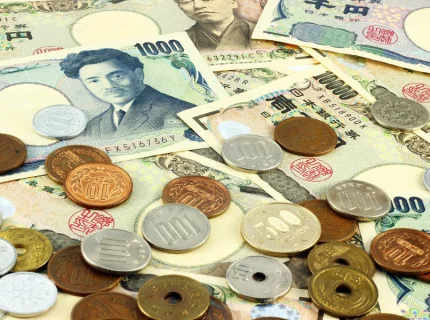
The currency in Japan is the yen (or JPY). Paper money comes in denominations of ¥1,000, ¥2,000, ¥5,000, and ¥ 10,000. The Japanese yen coins are issued in 1, 5, 10, 50, 100, and 500 denominations. The 1 and 5 yen coins are less commonly used in everyday transactions.
Traveler’s Credit Card
Credit cards are widely accepted by most businesses in Japan, including major hotels, shops, and department stores. Foreign travelers can easily use Visa, Mastercard, American Express, and other credit cards. However, some stores may not accept credit cards, so it’s advisable to confirm before making a purchase.
Checks
Traveler's checks are still accepted, but their use is declining. Banks in Japan are gradually reducing the availability of services for handling traveler's checks. Besides, businesses in Japan don't accept personal checks. Therefore, foreign visitors to Japan should bring other forms of payment, such as cash, credit cards, or debit cards.
Banks
Japanese banks offer the best exchange rates. Bank hours are from 9 am to 3 pm, while ATMs in banks operate until midnight or 9 pm on weekends and holidays. For 24/7 service, ATMs at convenience stores are an option, but only those with English instructions will work with foreign cards.
Currency Exchange
Most banks offer currency exchange services, where visitors can leverage the best rates. Although exchanging money at airports is possible, rates might be less favorable, and airport exchange desks might be closed at night.
ATMs are also available at the airports, allowing you to withdraw Japanese yen without incurring foreign transaction fees (make sure to decline anything that requests conversion rates). Many travelers say that the Seven Bank ATMs are the most cost-effective option for currency exchange.
Tax-Free Shopping
In Japan, many purchases, including alcohol, incur a 10% VAT. However, travelers staying in Japan for less than six months are eligible for tax exemptions on “general” and “consumable” purchases greater than 5,000 yen. To receive a refund, travelers should do the following:
- Purchase at stores that display a “Tax-free” sign.
- Apply for tax exemption on the same day of purchase.
- You can't consume tax-free "consumable" purchases in Japan. In addition, you must take them out of the country within 30 days. This doesn't apply to "general goods" such as electronics, jewelry, clothing, etc.
- Prove your identity:
A) present your passport to a shop owner when making a purchase
B) If option A is not possible, pay the total price and receive a refund later at a tax-free counter.
- Always ask for a Record Purchase. You will need it when checking into the airport customs.
Tipping
Tipping is not a common practice in Japan and can even be considered rude in some contexts. Many hotels and restaurants usually add a 15% service fee to the bill in addition to the 10% VAT.
Interesting Facts About the Japanese Yen
Here are a few interesting facts about Japanese currency, showcasing its historical and cultural significance.
- The yen became a basic unit of Japan in 1871, replacing copper coins denominated in mon, a currency from 1336 to 1876.
- The 1,000-yen banknote displays a famous bacteriologist, Hideo Noguchi; the 5,000 banknote features Higuchi Ichiyo, a novelist and short story writer; the 10,000 yen note depicts Yukichi Fukuzawa, an educator and journalist during the Meiji Restoration.
- At the time of writing, the yen is the world’s fifth most traded currency.
- The yen is among the top 10 most popular currencies in the world, renowned for its security features that make it nearly impossible to counterfeit.